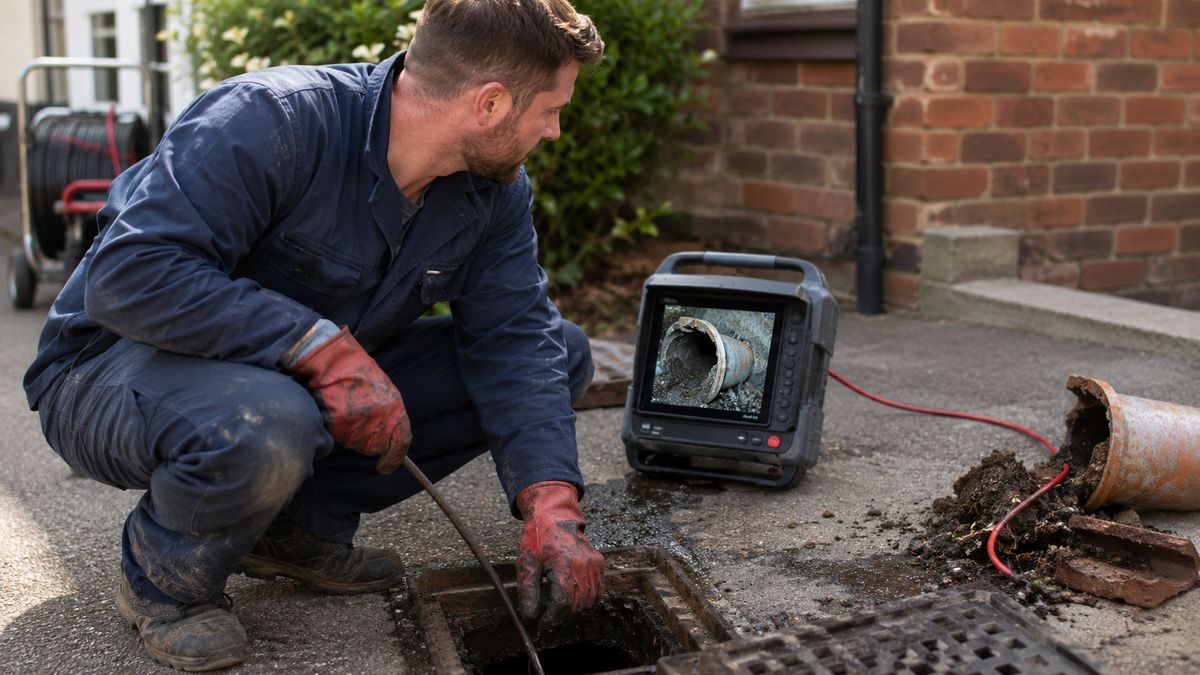
A slow or backed-up drain does not always mean the same thing. Sometimes there is a straightforward blockage that can be cleared with rods or high-pressure jetting. Other times the blockage is only a symptom of a cracked, displaced or collapsed section of pipe.
The difference matters because repeatedly clearing a damaged drain can give temporary relief without fixing the reason it keeps blocking. The signs below can help you decide whether you are probably dealing with a blocked pipe or whether it is worth investigating the drain itself.
Signs it is probably a blocked pipe
A normal blockage often builds gradually. Water may start draining more slowly, a sink or shower may gurgle, or an outside gully may take longer to empty. In many cases only one fixture or one part of the system is affected at first.
- One sink, toilet, shower or gully is affected while the rest of the property drains normally.
- The problem developed over days rather than appearing after months of repeat trouble.
- You can hear gurgling as water struggles past an obstruction.
- The drain clears fully after rodding or high-pressure drain jetting and stays clear.
- There are no obvious signs of ground movement, persistent smells or leakage above the drain run.
Signs a drain may be broken, cracked or displaced
Structural problems tend to leave a pattern. A damaged joint can catch paper and debris, root ingress can keep narrowing the pipe, and a section that has dropped out of alignment can hold water and solids even after it has been cleared.
- The same drain blocks again soon after being cleared.
- More than one fixture backs up at the same time.
- There is a persistent foul smell even when water appears to be flowing.
- The ground above the drain has sunk, softened or become unusually wet.
- Roots or pieces of pipe are found during clearance.
- The engineer can clear a passage, but the drain still does not flow normally afterwards.
Blocked soil pipe symptoms
A blocked soil pipe can look more dramatic because it serves toilets and often other bathroom waste. Typical warning signs include a toilet that rises unusually high when flushed, gurgling from a nearby basin or bath, wastewater appearing in a lower fixture, or several bathroom fittings slowing at the same time.
If the problem is confined to a single toilet, the obstruction may be close to the pan. If several fixtures react together, the restriction is more likely to be farther along the soil pipe or underground drain. Avoid repeatedly flushing a toilet that is already filling higher than normal, because that can turn a partial blockage into an overflow.
Why a drain can keep blocking in the same place
Repeat blockages are one of the strongest reasons to look beyond the material causing the immediate obstruction. Grease, wipes and scale can of course build up again, but when the same section fails repeatedly there may be something in the pipe that is collecting debris.
Common examples include a displaced joint, root ingress, a cracked clay pipe, a deformed plastic pipe or a low point where water is sitting instead of draining freely. Clearing the debris can restore flow, but it does not remove the defect underneath. That is where a CCTV drain survey becomes useful.
When CCTV is worth doing
A camera survey is usually most useful when the drain has already been cleared enough for the camera to travel through it. The inspection can then show whether the pipe is intact, where a defect is located and how severe it is.
It is especially worth considering after repeat blockages, before buying a property where drainage is a concern, after suspected root ingress, or when there are signs of movement or leakage. If damage is confirmed, the footage also helps determine whether a local patch, lining or excavation is the sensible repair. See our drain repairs in Haverhill page for the main repair options.
Blocked drain or broken pipe: a quick comparison
| Clue | More like a blockage | More like pipe damage |
|---|---|---|
| One fixture affected | Often | Less typical |
| Keeps returning after clearance | Possible | Important warning sign |
| Sunken or wet ground | Unusual | Worth investigating |
| Clears and stays clear | Typical | Less likely |
What to do if you are not sure
If the drain is simply slow or blocked for the first time, clearance is normally the logical first step. If it keeps happening, multiple fixtures are affected or there are signs that the pipe itself may be damaged, investigate rather than paying for the same clearance repeatedly.
For a straightforward obstruction, see blocked drains in Haverhill or drain unblocking in Haverhill. If the symptoms point to structural damage, a camera inspection is usually the fastest way to find out what is actually happening underground.